
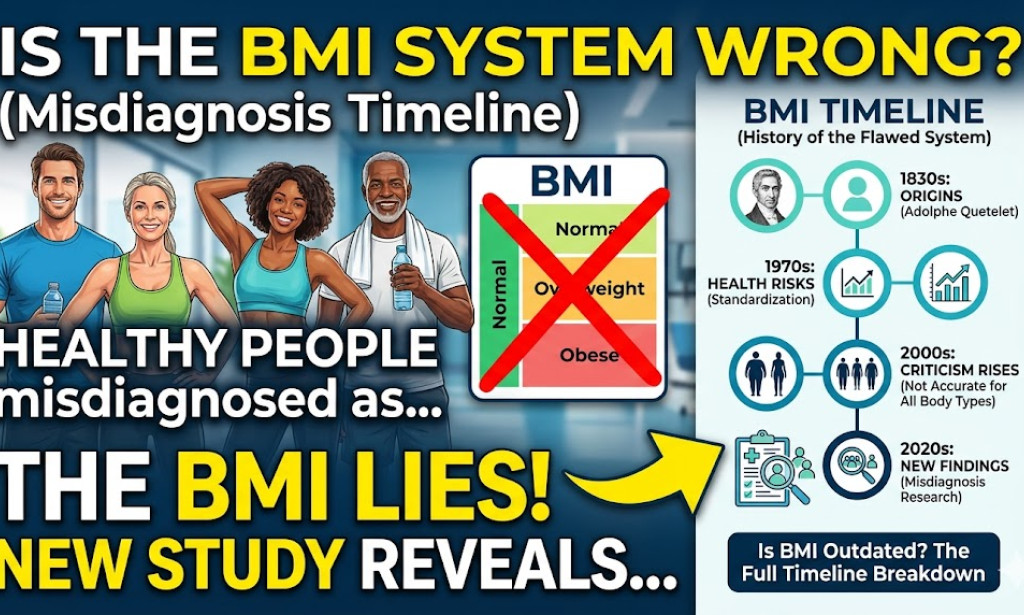
The Flaws in the Gold Standard
For decades, the Body Mass Index (BMI) has served as the primary tool for doctors and insurance companies to categorize health based on weight. Calculated by dividing a person's weight by the square of their height, the metric is intended to provide a quick assessment of whether someone is underweight, at a healthy weight, overweight, or obese. However, a comprehensive new study suggests this mathematical formula is leading to widespread misdiagnoses.
Muscle Density and the 'Overweight' Athlete
One of the most significant issues identified in the research is that BMI cannot distinguish between muscle mass and body fat. Because muscle is significantly denser than fat, individuals with high athletic builds or those who engage in regular strength training are often categorized as 'overweight' or 'obese' despite having low body fat percentages and high cardiovascular fitness. This misclassification can lead to unnecessary medical interventions and psychological stress for patients who are actually in peak physical condition.
The 'Skinny Fat' Phenomenon
Conversely, the study highlights that BMI often fails to identify health risks in individuals categorized as 'healthy.' This group, sometimes referred to as 'metabolically obese normal weight,' may have low muscle mass and high levels of visceral fat—the dangerous fat that surrounds internal organs. Because their BMI falls within the normal range, these individuals may miss out on critical screenings for conditions like:
- Type 2 Diabetes
- Hypertension
- High Cholesterol
- Non-alcoholic fatty liver disease
Moving Beyond the Number on the Scale
Researchers argue that health is far too complex to be reduced to a single ratio. The study suggests that instead of relying solely on BMI, medical professionals should transition toward a 'metabolic profile' approach. This would include measuring waist circumference, body fat percentage, and metabolic markers such as blood sugar and lipid levels.
Conclusion: A Tool, Not a Verdict
While BMI may still have some utility for large-scale population studies, its application at the individual level is increasingly being questioned. Experts recommend that patients talk to their healthcare providers about more comprehensive health assessments. By looking beyond the scale, the medical community can provide more accurate, personalized care that reflects the true health status of every individual.
You must be logged in to post a comment.